
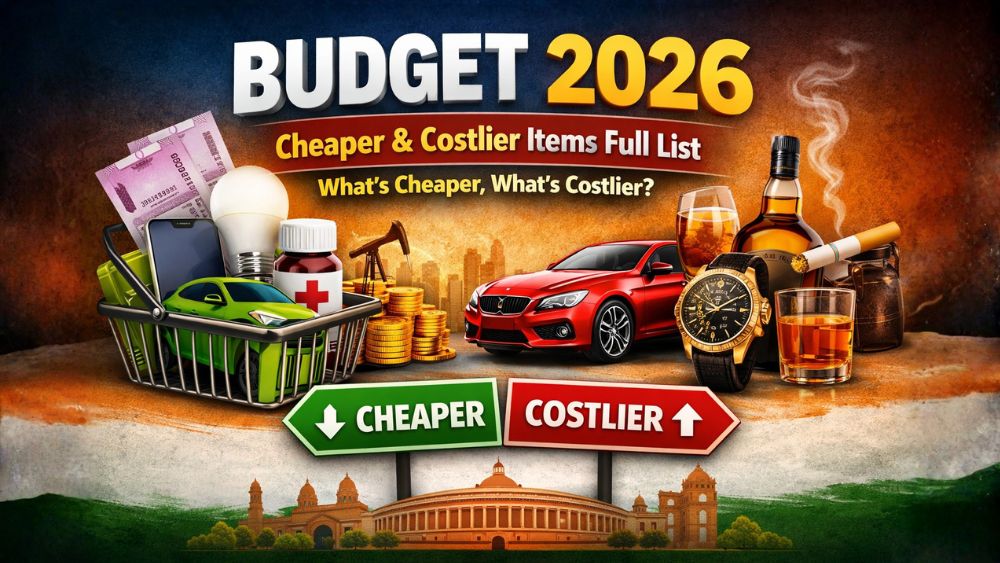
Let’s be honest—when the Union Budget is announced, the first question most of us ask is simple: “Ab kya sasta hua aur kya mehenga?” Budget 2026 is no different. Whether you’re a salaried professional, a business owner, a homemaker, or a student, the budget quietly sneaks into your daily life through prices of essentials, gadgets, fuel, and even healthcare.
Budget 2026 aims to balance growth, inflation control, and fiscal discipline. And hidden within those big policy announcements are changes that directly affect your monthly expenses.
Big Picture of Union Budget 2026
The Union Budget 2026 focuses strongly on:
-
Boosting domestic manufacturing
-
Encouraging green energy and EVs
-
Supporting agriculture and MSMEs
-
Rationalising customs duties
Instead of blanket tax cuts, the government has chosen a smarter route—making essential items cheaper while discouraging luxury imports.
How Budget 2026 Impacts the Common Man
Think of the budget like a household diet plan. Healthy essentials are subsidised, junk food gets expensive, and imported indulgences are discouraged. The idea is simple: support necessities, control inflation, and promote “Make in India.”
What Makes Items Cheaper or Costlier in the Budget?
Role of Customs Duty
Customs duty is the biggest price changer. Reduce it, and imports become cheaper. Increase it, and prices shoot up instantly.
GST Changes and Rationalisation
Though no major GST overhaul happened, fine-tuning of slabs and exemptions influenced pricing in select categories.
Government Subsidies and Incentives
Subsidies on EVs, agriculture, and healthcare directly lower end-user costs.
Global Economic Factors
Global crude prices, supply chain issues, and currency fluctuations also quietly influence prices—sometimes more than taxes.
Full List of Cheaper Items After Budget 2026
Good news first. Budget 2026 has made several everyday and growth-oriented items cheaper.
Daily Use and Household Items
-
LED bulbs and lighting components
-
Kitchen appliances components
-
Electric fans and energy-efficient devices
These reductions aim to promote energy efficiency in Indian homes.
Electronics and Technology Products
-
Mobile phone components
-
Semiconductor-related parts
-
Laptop and tablet manufacturing inputs
This doesn’t mean instant discounts on smartphones, but expect prices to soften gradually.
Automobiles and EV-Related Items
-
Electric vehicle batteries
-
Lithium-ion battery components
-
EV chargers
This is a big push toward cleaner mobility. EV ownership just became a little more affordable.
Healthcare and Medical Products
-
Life-saving drugs
-
Medical equipment components
-
Diagnostic devices
Healthcare affordability remains a strong focus, especially post-pandemic.
Agriculture and Farming Essentials
-
Farm machinery parts
-
Irrigation equipment
-
Seeds and agri-input components
Farmers stand to benefit from reduced production costs.
Imported Goods That Got Cheaper
-
Select industrial raw materials
-
Manufacturing inputs not produced domestically
This helps Indian manufacturers stay competitive globally.
Full List of Costlier Items After Budget 2026
Now comes the pinch.
Luxury and Non-Essential Goods
-
High-end imported electronics
-
Luxury cars and bikes
-
Premium watches and accessories
The message is loud and clear: luxury imports will cost more.
Tobacco, Alcohol, and Sin Goods
-
Cigarettes and tobacco products
-
Certain alcoholic beverages
These increases also serve public health objectives.
Certain Imported Products
-
Fully built imported electronics
-
Imported toys and non-essential goods
Domestic alternatives are being encouraged.
Fuel-Related and Energy Products
-
Some petroleum-linked products
-
Aviation turbine fuel components
Prices may fluctuate depending on global crude trends.
Items Affected by Higher Customs Duty
-
Finished foreign goods competing with Indian manufacturers
What Got Cheaper for Middle-Class Families
Middle-class households benefit the most from:
-
Lower healthcare costs
-
Affordable electronics over time
-
Reduced EV ownership expenses
It’s not flashy, but it’s practical relief.
What Became Expensive for High-Income Consumers
If you love imported luxury, Budget 2026 might sting. Premium lifestyles now come with premium price tags.
Sector-Wise Impact of Budget 2026
Impact on Consumers
Consumers gain through stable prices on essentials and gradual reductions in technology costs.
Impact on Businesses and MSMEs
Lower raw material costs mean better margins and competitiveness.
Impact on Startups and Tech Sector
Cheaper components and policy stability encourage innovation.
Impact on Farmers
Reduced input costs improve profitability and sustainability.
Budget 2026 and Inflation: What to Expect
By controlling import dependency and supporting domestic production, Budget 2026 aims to keep inflation in check—without aggressive tax cuts.
Should You Change Your Spending Habits Now?
Yes, but wisely. If you’re planning to buy EVs or electronics, the coming months may offer better prices. Luxury imports? Expect higher bills.
Expert Take: Is Budget 2026 Pro-People or Pro-Growth?
It’s both. Growth fuels employment, and targeted relief protects consumers. Think marathon, not sprint.
Conclusion: What Budget 2026 Really Means for You
Budget 2026 isn’t about instant gratification. It’s about steady, long-term relief. Essentials get cheaper, luxuries get costlier, and India moves one step closer to self-reliance. For the common man, it quietly reshapes daily expenses—without making a lot of noise.
FAQs
1. What are the biggest cheaper items in Budget 2026?
Healthcare products, EV components, and electronic manufacturing inputs saw major relief.
2. Which items became most expensive after Budget 2026?
Luxury imports, tobacco products, and fully built foreign electronics.
3. Will smartphone prices reduce after Budget 2026?
Gradually, yes—due to cheaper components and local manufacturing incentives.
4. Is Budget 2026 good for middle-class families?
Yes, especially in healthcare, mobility, and long-term cost stability.
5. Does Budget 2026 help Indian manufacturers?
Absolutely. Higher duties on imports and cheaper raw materials strongly support Make in India.